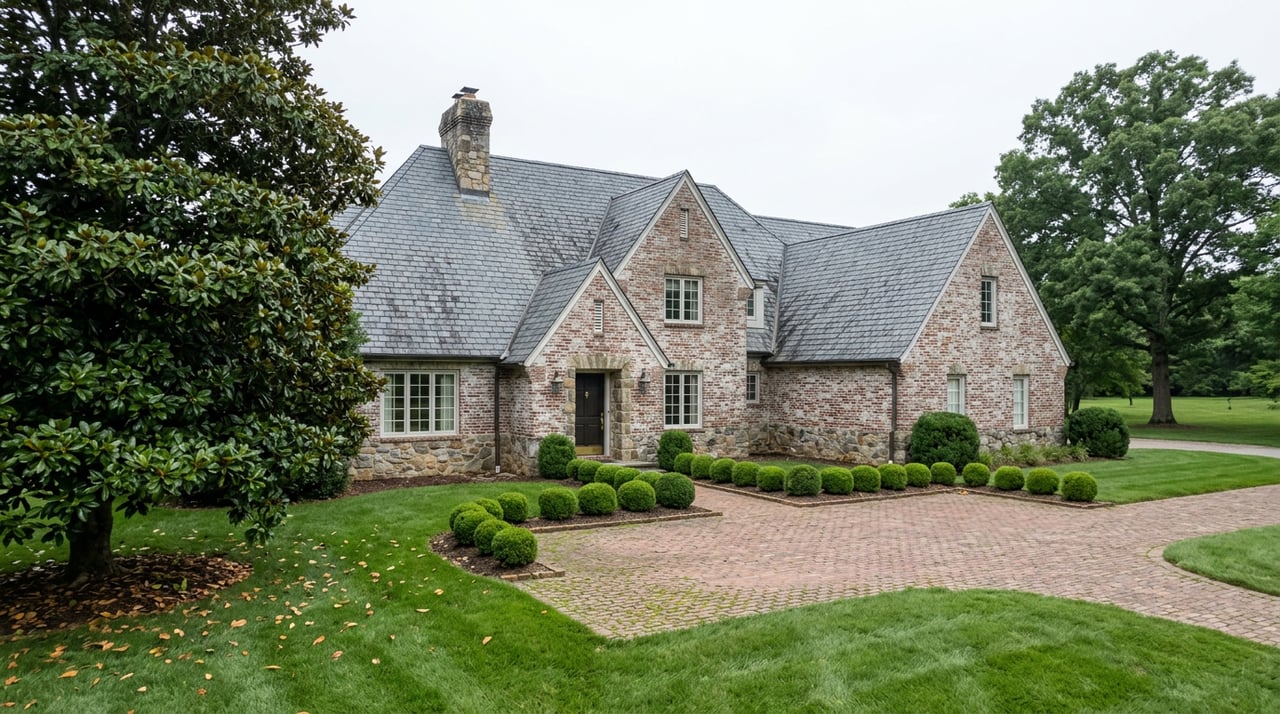
Belle Meade Zoning and Renovation Rules Buyers Should Know
Two lots go up for sale in Belle Meade within the same month, priced within a few hundred thousand dollars of each other, similar square footage, similar street. One can support an addition, a pool house, maybe a second story down the road. The other cannot add a garage bay without a variance fight. The listing sheet does not tell you which is which. The zoning map does.
That is the piece most buyers skip when they compare a Belle Meade property to something in Franklin or Brentwood on price alone. The city's own Floor Area Ratio and its five zoning districts, not the current square footage or the sale price, decide what a lot can become. If you are shopping Belle Meade with renovation or rebuild plans in mind, that ratio matters more than almost anything else on the sheet.
Start with the numbers that are supposed to orient you, because they are the first sign something unusual is happening in this market. As of an update dated May 31, 2026, Zillow put the average Belle Meade home value at $3,390,006, up 10.9 percent over the prior year. That sounds like a steady, healthy climb. Then look at Redfin's read on the same city: in November 2025, Redfin reported a median sale price of $4.8 million, a jump of 340 percent compared to the year before.
That is not a market appreciating 340 percent in twelve months. That is a market small enough that one or two high-dollar estate closings can swing the median by a factor of four. Trailing 24-month sales data for Belle Meade single-family homes puts the total near 570 closed transactions citywide, which works out to well under thirty closings a month across the entire city. When your sample size is that thin, a single Iroquois Steeplechase-adjacent estate sale can move the median more than an entire quarter's worth of ordinary sales.
The inventory counts compound the confusion. Check three different real estate sites for active Belle Meade listings in the same week and you will get answers ranging from single digits to several dozen. That is not because homes went on and off the market overnight. Each site draws its own boundary for what counts as Belle Meade, some pulling from the incorporated city limits, others from a wider zip code footprint. Comparing medians across sources without knowing whose map you are looking at is comparing noise, not signal.
If the median price will not orient you, the Floor Area Ratio will. FAR in Belle Meade typically runs between 0.20 and 0.225, and it caps how much square footage you can build relative to the size of the lot. A larger lot allows a larger home, but not infinitely, and not automatically.
This is the detail that separates two properties that look identical on paper. A 4,500-square-foot home on a lot zoned for a higher FAR ceiling has real room to grow. The same 4,500-square-foot home on a lot with less FAR headroom, or on a smaller parcel, may already be close to its maximum. Nobody puts that ceiling in the marketing photos.
Belle Meade adopted a new zoning ordinance and map in September 2024, and the current code is meant to be searchable through the city's own materials. The system breaks the city into five zoning districts. Four of them are built to preserve estate or larger-lot character. The fifth, Residence C, is reserved for some of the smallest and most urban lots in the city. Each lot is limited to one principal dwelling, and minimum lot sizes vary meaningfully by district.
That means two homes with nearly identical square footage can sit in entirely different districts and carry entirely different expansion or rebuild potential. The house is not what tells you the ceiling. The district does. Before you fall for a lot because of its trees or its setback, it is worth confirming which of the five districts it actually sits in, since that answer will shape every renovation conversation that follows.
Belle Meade's Historic Zoning Commission adds a review step that many buyers moving from other cities do not expect. Before you can even apply for a standard building permit, most exterior work, additions, and new construction require a Certificate of Appropriateness from the city's Conservation Overlay and Historic Zoning Commission process. That review exists to keep new work in line with the city's mostly pre-1960s architectural character, and it is not a rubber stamp step you can skip.
A Certificate of Appropriateness is valid for one year from the date it is issued. If no work happens during that window, you have to submit again. That timeline detail rarely comes up during a showing, but it matters enormously if your purchase timeline assumes you can close, get approvals, and break ground within a tight window.
Demolition carries its own documentation burden. Under the city's design guidelines, a demolition application requires photographs of the building proposed for removal along with a written statement explaining the reason for demolition and the proposed use of the site. That is a materially heavier lift than a standard demolition permit in most Nashville-area suburbs, and it is worth budgeting the extra weeks it takes to assemble.
Even once a project clears zoning and historic review, the city's own design guidelines get specific about materials in ways that catch renovation buyers off guard. Garage doors cannot be vinyl, fiberglass, or aluminum. Asphalt shingles must meet a minimum weight of 300 pounds per square, or use a 3-tab profile. Metal roofs require a 60-year finish guarantee and cannot use exposed screws. Even vent stacks are regulated: they cannot sit on the portion of the roof facing what the zoning code defines as the front of the house.
None of this shows up in a typical inspection report. It shows up when a contractor submits plans and the Historic Zoning Commission sends them back. If you are underwriting a renovation budget for a Belle Meade property, building in the cost of compliant materials from the start saves a redesign later.
The most recent addition to this system took effect March 15, 2026. Belle Meade now requires a locking, six-to-eight-foot opaque fence around the property or construction area before a demolition or new-construction permit is issued, not after work begins. It is a small line item, but it adds real cost and calendar time to the front end of a project that a buyer touring an open lot rarely thinks to ask about.
Site work adds another layer. Land disturbance permits are required for many redevelopment scenarios in the city, including disturbance areas of 10,000 square feet or more and most pool construction. That threshold is easy to hit on a full renovation or rebuild, and it means engineering and drainage planning need to be part of the budget conversation before the first offer, not after.
Belle Meade's housing stock skews old. Trailing sales data puts the median year built at 1955, which means the renovate-versus-rebuild question comes up here far more often than in the newer-construction subdivisions common across Williamson County. That is part of what gives the neighborhood its architectural continuity, mature tree canopy, and Tudor Revival and Georgian Colonial character. It also means a much higher share of Belle Meade transactions carry the zoning, FAR, and Historic Zoning Commission questions this piece just walked through.
If you are comparing a Belle Meade estate to a comparably priced new-build in Franklin or Brentwood, the sticker prices are not measuring the same thing. One is a finished product. The other is a starting point whose real ceiling depends on FAR, zoning district, and a review process that has nothing to do with the number on the listing sheet.
Do these zoning rules apply if I just want to update a kitchen or replace flooring? Interior work generally does not trigger Historic Zoning Commission review. The Certificate of Appropriateness process and the design guidelines apply to exterior changes, additions, new construction, and demolition, not interior remodeling.
Can I still tear down an older home and build new in Belle Meade? Yes, and it happens regularly, but it is not a light-lift process. Expect the demolition documentation requirement, the pre-permit fencing rule, and potentially a land disturbance review if the site work crosses the 10,000-square-foot threshold.
Does a bigger lot guarantee I can build a bigger house? Not on its own. FAR and the zoning district still set the ceiling, and larger disturbance areas can trigger additional stormwater review that a smaller project would avoid.
A Belle Meade listing price tells you what a seller wants today. It does not tell you what a lot's zoning district and FAR ceiling will let you do with it tomorrow. If you are comparing Belle Meade to other Nashville-area neighborhoods and renovation or rebuild potential is part of your plan, that is the conversation worth having before you write an offer, not after.
I've spent more than two decades helping buyers and sellers work through exactly this kind of due diligence across Green Hills, Belle Meade, and Williamson County. If you are looking at a Belle Meade property and want a clear read on what its zoning district actually allows, Jeanie Barrier would love to help. Let's Connect.
Thinking about buying or selling in Nashville? With Jeanie’s local expertise and 25+ years of real estate sales experience, she’ll guide you every step of the way. Call today to get started!